


Nail fungus (lat. onychomycosis) – in other words – a fungal infection of the nails.The disease can affect both the nails of the palms and feet.The cause is mainly so-called dermatophytes, less often - fungi of the Candida variety (yeasts) or molds.
Changes in color, thickening and brittleness of the nails are symptoms of fungus, but also other diseases of the skin and nails, so if such changes are detected, you should consult a dermatologist and do bacteriological tests for the presence of fungi, as well as culture.
It is estimated that approximately 50% of people whose fingernails are rough and discolored have nail fungus.
Causes and symptoms of nail fungus
Nail fungus usually appears after infection with foot fungus.According to research, up to 42% of people suffer from foot fungus, and 21% from nail fungus.More often it affects men (with the exception of candidiasis), rarely children, but very often elderly people.This disease affects all races equally.
The most common fungal nail infections in temperate climates are caused by dermatophytes, i.e. Trichophyton rubrum (70% of nail fungus cases), Trichophyton mentagrophytes (20% of all nail fungus cases), Trichophyton interdigitale, Epidermophyton floccosum, Trichophyton violaceum, Microsporum gypseum, Trichophyton tonsurans, Trichophyton soudanense andTrichophyton verrucosum.There are more and more cases of infection with fungi of other varieties in the world, in addition to dermatophytes and yeasts, namely Fusarium spp., Scopulariopsis brevicaulis, Aspergillus spp.In some countries, Aspergillus spp.is the cause of up to 15% of cases of fungal disease.
You can become infected with a fungus, for example:
- in the pool,
- in the sauna,
- by putting on someone else's shoes or putting on someone else's socks,
- by using someone else's manicure equipment.
- The fungus often appears between the toes.
What is nail fungus?
Fungi that have already appeared on the skin of the feet can penetrate under the skin and nail if the nail is damaged.It could be a wound or a nail cut too short.Nail diseases usually affect weakened nails, and the weakening is facilitated, in particular, by the use of nail polish and false nails.
In addition, some patients are predisposed to these types of infections due to various existing diseases.One of them is immunity disorders (immunosuppressive conditions), associated, for example, with HIV infection or chronic treatment with immunosuppressive drugs after an organ transplant, or with certain autoimmune diseases.
Another group of problems associated with an increased risk of nail fungus are hormonal disorders (Cushing's disease or syndrome, hypothyroidism and others).This disease is more common in the presence of metabolic diseases, for example, diabetes, which is a disease that contributes to various infections, not only fungal ones.
The fungus is more common in obese people who suffer from anemia (anemia), disorders within the circulatory system that cause ischemia of the nail plate, as well as in patients suffering from gastrointestinal disorders.
Nail fungus often affects patients who are treated with chemotherapy for malignant tumors, taking antibiotics (especially without accompaniment in the form of taking probiotics), as well as in patients who, for various reasons, take steroid drugs known for their immunosuppressive effects, that is, disrupting the functioning of the immune system.
There are four main types of nail fungus, regardless of what part of the nail is affected.The most common type of fungus affects the far (distal) part of the nail, including the supracungual plate, that is, the skin located in front, under the nail plate.
Symptoms of nail fungus
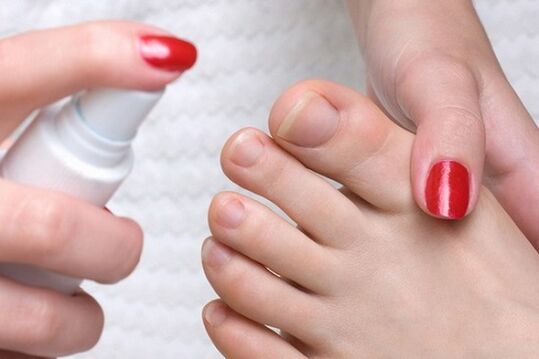
Interestingly, nail fungus may initially be asymptomatic;in these cases, only increased fragility and a slight change in the color of the nail plate occur.Only after some time do characteristic, pronounced changes in the appearance of the nail begin to appear.
Symptoms of nail fungus are, first of all, changes in the nails, especially in the initial stage of development of the disease.The first changes usually appear on the free edge (front) of the nail plate or on the sides.
As nail fungus continues to develop, it may also cause problems with physical activity (such as exercise), and even with walking and standing.Then patients complain of paresthesia (numbness), pain, discomfort, and loss of physical fitness.Characteristic changes within the nails during fungus include:
- color changes - nails become white, yellow, brown, greenish,
- peeling and delamination of the nail plate, significantly increased fragility,
- corrugation of nail plates,
- thickening of the nail plate, which is a symptom of excessive keratinization,
- unpleasant foot odor.
The fungus can manifest itself with various symptoms.Two different patients infected with the same type of fungus may experience different changes on the nails.
Toenail fungus can have a somewhat distinctive character.It can be caused by the so-called.mold fungi.This form of fungus is often found in older people and is associated with impaired blood supply to the nail (trophic disorders).The nail plates of the thumbs thicken, become deformed, acquire a yellow-greenish tint, and a significant thickening of the epidermis is observed under the plates.As a rule, without treatment, nail fungus lasts for many years.Unfortunately, even with proper and long-term treatment, this disease can recur.
The above symptoms usually indicate a fungus.In addition to the characteristic appearance of the nails, the detection of fungus on the skin of the feet and hands, which usually accompanies a fungal nail infection, can help in diagnosing nail fungus.However, the diagnosis is not always obvious.
In some cases, additional laboratory analysis may be necessary.The doctor takes a sample and examines it under a microscope.Another auxiliary test for diagnosing nail fungus is a culture of fungi taken.Thanks to this, it is possible to determine their type and test sensitivity to specific medications.
If the doctor suspects nail fungus in a given patient, he should also take into account other diseases that may have a similar picture, namely:
- nail psoriasis - may look similar, but the characteristic difference of this disease is that it often affects all nails, symmetrically;in addition, psoriasis is usually accompanied by typical skin changes;
- thrush (or candidiasis) of the nails is another type of nail fungus, unlike the classic one, associated with infection with a dermatophyte;it is characterized by the appearance of purulent discharge from under the nail folds, as well as pain;
- trophic changes caused by impaired blood supply to the nail plate;usually begin in the proximal part of the plate (that is, at its base);
- lichen planus is a disease characterized by the appearance of papules (changes) on the skin and mucous membranes, the simultaneous presence of which, as a rule, makes it quite easy to distinguish lichen from a fungus;The nail plate with lichen has a characteristic longitudinal corrugation.
When pressed, purulent contents appear.If candidal changes do not go away for a long time, the nail plates become gray-yellow-brown, lose their shine, become rough, and flake.
Candidiasis of the nail plates and ridges must be distinguished from felon, that is, a bacterial infection, which differs primarily in that it is limited to only one finger and is more acute, with greater pain.In addition, candidiasis can be confused with “ordinary” nail fungus and nail psoriasis.
In order to make a definitive diagnosis of thrush, it is necessary to perform a culture (culture of the fungus Candida).It is impossible to recognize mushrooms of this family in a direct preparation, i.e.by examining secretions taken from a sore spot, without culture.
In conclusion of the discussion of the symptoms of nail fungus, it is worth recalling the psychological problems that patients suffering from this disease may encounter.These include a decreased sense of self-esteem and deterioration in social contacts.These problems can especially affect those whose fingernails are affected by fungus.
Methods for treating nail fungus
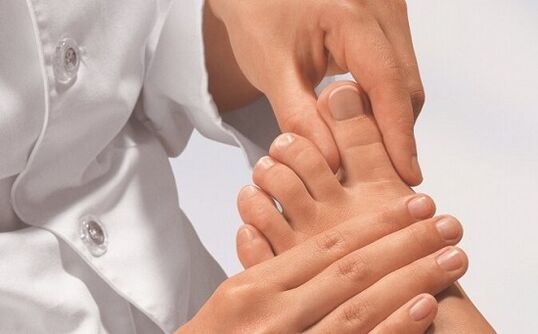
Treatment for nail fungus is mandatory.Lack of treatment for nail fungus leads to a chronic and progressive course of the disease.Spontaneous recovery cannot occur.Therefore, if any suspicious changes appear in the area of the nails of the palms or soles, you must visit a dermatologist.
Even if it turns out that the cause of the disorder is not a fungal infection, only a dermatologist will be able to determine what disease the patient is suffering from.
Unfortunately, treatment of the disease under discussion is difficult and not always effective.This happens because a frustrated patient simply stops taking the medications prescribed to him.For treatment to be effective, it must last several months, even after symptoms disappear.
In the initial stages of the fungus, when changes on the nails are still minor, a fungicidal ointment will be sufficient.When the fungus is advanced, oral agents are usually used.Recurrences of the fungus are quite common, so after recovery you should follow the recommendations of a dermatologist and take care of foot hygiene.Many patients refuse treatment immediately after symptoms disappear, and this is wrong because it can lead to relapse and the need to start treatment all over again.
Treating nail fungus at home is usually ineffective.
Changes in the nails should be examined by a dermatologist.What you can do on your own to help with therapy is to practice good foot hygiene, wash and dry your feet thoroughly, don't cut your nails too short, and don't share other people's manicure equipment, towels, socks, or shoes.
In general, treatment for nail fungus depends on the type of infection, the clinical type of the disease, the number of infected nails, and the degree of damage to the plates.In some cases, systemic treatment via oral agents is necessary.Sometimes local treatment, that is, ointments and creams, is sufficient.Undoubtedly, the combination of systemic and local treatment improves the success rate of nail fungus therapy.Unfortunately, even with the use of the latest medications, the percentage of relapses of nail fungus remains high.In the future, photodynamic and laser therapy may be used in the treatment of this disease.
Effective drugs for the treatment of nail fungus
Local remedies without oral drugs should be used only in cases where the lesion occupies less than half of the distal (far) part of the nail plate, and also when the patient does not tolerate systemic treatment well.These are rare cases - as a rule, local treatment, unfortunately, is not enough.
As a rule, local remedies used as the only treatment for nail fungus are not able to completely cure it, since they do not penetrate deep enough into the plate.
True, it was believed that the solutions penetrate into all layers of the nail, but they remain ineffective if used in monotherapy (as the only medicine).However, these drugs may be used as “adjuvant” therapy, as an addition to an oral remedy, or as a preventive measure for relapse in patients who have previously treated nail fungus with systemic (oral) medications.
Medicines for the treatment of nail fungus
Oral treatment in cases of nail fungus is almost always necessary.The newest generation of oral antifungal medications have recently replaced previous generations in the treatment of nail fungus.The effectiveness of new products lies in their ability to penetrate deep into the nail plate within a few days after the start of treatment.
Through their use, it is possible to reduce the duration of therapy, while simultaneously achieving a higher percentage of recovery and fewer side effects.
In the case of therapy using these means, patients should arm themselves with patience and calmly wait until a healthy nail grows after completion of treatment.This may continue for some time.
Removing nail fungus
Removing nails affected by fungus is also considered as a solution to the problem.For nail fungus, surgical treatment can be used.Here we are talking about mechanical or chemical removal of the infected nail plate.Chemical removal of the plate is possible by using a 40-50% urea solution.This is a painless method and effective in cases where the nail is very thick.
Nail plate removal should be considered as an adjunctive treatment in patients on oral therapy.The combination of oral, local treatment (lubrication), as well as surgical intervention gives a higher percentage of cure and at the same time is the most effective and cheapest option (minimum relapses, short-term treatment).
During the treatment of nail fungus, there is no need to restrict activities in a broad sense, but it is recommended to avoid places where infection can occur, for example, public swimming pools.